Global Autism Research & Innovation Summit
THEME: "Connecting Insights, Transforming Lives: A Global Vision for Autism Innovation"
 22-23 Mar 2027
  Paris, France
 THEME: "Connecting Insights, Transforming Lives: A Global Vision for Autism Innovation"
22-23 Mar 2027
Paris, France 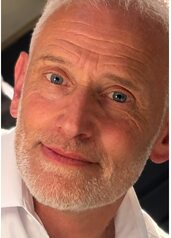
SEND & Autism Specialist | Founder, Listen2Me Training & Consultancy, United Kingdom.
Title: When the Child Isn't the Barrier: Rethinking Autism, Communication and Inclusion
Tony Harget is a UK-based SEND and Autism Specialist with over 30 years' experience supporting autistic and neurodivergent children, young people and their families across Early Years, school and post-19 education. His career has included teaching, senior leadership and helping to establish specialist post-19 provision in Birmingham, UK.
He is the founder of Listen2Me Training & Consultancy, through which he provides practical autism and SEND training and consultancy to schools, organisations, professionals and families. He also works with national autism and children's organisations in the UK and is increasingly involved in international autism and SEND work.
His specialist interests include communication and supporting non-speaking and minimally speaking autistic people, sensory processing and regulation, masking, demand avoidance and inclusive practice. A central theme of his work is encouraging professionals to look beyond behaviour and ask what an autistic person may be experiencing or communicating, with an emphasis on adapting environments, communication and support rather than expecting the individual simply to adapt.
Being present and being included are not always the same thing. Autistic children and young people may be physically present in classrooms, playgrounds and community settings while still experiencing significant barriers to meaningful participation. Too often, these barriers are located within the child: difficulties are described in terms of communication, engagement, behaviour or an inability to cope. In this practice-informed presentation, I consider what changes when we examine the environment, communication systems and adult expectations instead.
Drawing on more than 30 years of professional practice in special education and autism support, I bring together recurring observations from my work with autistic children, young people, families and professionals. I explore how reliance on spoken communication, insufficient processing time, sensory demands and expectations around participation can unintentionally restrict inclusion. I also consider behaviour, demand and regulation as interconnected experiences rather than isolated problems to be corrected.
I give particular attention to masking and the limitations of judging inclusion through observable participation. A child who appears settled, compliant and engaged may nevertheless be expending considerable effort to manage an environment that does not meet their needs.
I propose a shift from asking, “How do we enable this child to fit into this environment?” towards asking, “What can we change within the environment to enable participation, communication and belonging?”
Meaningful inclusion requires more than physical presence. It requires recognising and removing barriers that may exist not within the autistic child, but within the systems and environments surrounding them.
