Global Autism Research & Innovation Summit
THEME: "Connecting Insights, Transforming Lives: A Global Vision for Autism Innovation"
 22-23 Mar 2027
  Paris, France
 THEME: "Connecting Insights, Transforming Lives: A Global Vision for Autism Innovation"
22-23 Mar 2027
Paris, France 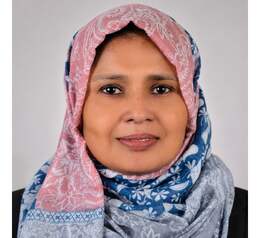
Universiti Malaya, Malaysia
Title: Are Malaysian Universities Ready for Autistic Students?
Faizanah Abdul Alim Sidique is a Senior Lecturer in the Department of Educational Psychology and Counselling, Faculty of Education, Universiti Malaya. She is a special education academic, researcher and practitioner with experience across early childhood, primary, secondary and higher education. Her work focuses on autism, neurodiversity, inclusive education, emotional regulation and educator professional development. She completed her PhD in Education at the International Islamic University Malaysia, examining an emotion-based intervention to support emotional regulation in autistic children. Her current work includes academic staff capacity-building for neurodivergent university students, neuroinclusive higher education and accessible environments. Her scholarship combines research with direct practice and focuses on translating evidence into inclusive educational practice.
As Malaysia advances the Malaysia Higher Education Blueprint 2026–2035 and its commitment to more inclusive, humanity-centred higher education, an important question is whether universities are ready to support autistic students beyond physical access and individual accommodation. This perspective paper examines the readiness of Malaysian universities to provide neuroinclusive learning environments for autistic students. It uses a narrative synthesis of recent peer-reviewed literature on autistic students in postsecondary education, emerging Malaysian research, and national higher-education policy directions, interpreted alongside practice-informed insights from special education and university teaching. The synthesis identifies recurring challenges across four interconnected areas: teaching and assessment practices, communication and executive-function demands, sensory environments, and access to coordinated support. Autistic students may appear academically capable and independent while experiencing less visible difficulties related to ambiguous instructions, sensory overload, managing competing demands, sudden changes, disclosure, and navigating university systems. These challenges suggest that inclusion cannot depend solely on students requesting individual adjustments after difficulties arise. Malaysian evidence on autistic university students remains limited, particularly regarding how institutional practices shape participation, wellbeing and academic experiences. The paper therefore argues for a shift from reactive accommodation towards proactive neuroinclusion, where accessibility is embedded in pedagogy, assessment, student services, staff development and campus culture. Such an approach does not lower academic standards; rather, it reduces unnecessary barriers so autistic students have equitable opportunities to participate and demonstrate their capabilities. The paper concludes that translating Malaysia’s inclusive higher-education policy aspirations into everyday university practice will require institution-wide responsibility, stronger staff capacity and greater attention to autistic students’ lived experiences.
