Global Autism Research & Innovation Summit
THEME: "Connecting Insights, Transforming Lives: A Global Vision for Autism Innovation"
 22-23 Mar 2027
  Paris, France
 THEME: "Connecting Insights, Transforming Lives: A Global Vision for Autism Innovation"
22-23 Mar 2027
Paris, France 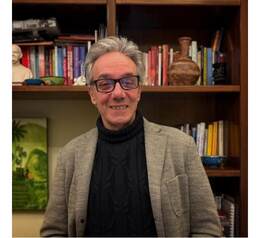
Il Tuliapano Soc Coop, Italy
Title: Smart, Inclusive and Health-friendly Museums for Visitors with Autism and Cognitive Disabilities: The case of Parvula Domus app
Giovanni Minucci is a researcher with an interdisciplinary focus on healthy ageing, well-being, resilience, social and cultural engagement, physical activity, and frailty prevention among older adults. His work contributes to understanding how lifestyle, leisure participation, exercise, and social engagement can support healthy ageing and improve quality of life in community-dwelling older populations. He has contributed to research examining the relationship between social and cultural participation, dietary behaviours, leisure activities, resilience, and well-being among residents in the metropolitan area of Naples, Italy. His research interests also include multidimensional approaches to frailty screening and prevention, with contributions to the SUNFRAIL+ study involving community-dwelling older adults across eight Italian regions. Through his research, he supports evidence-based approaches to promoting active ageing, resilience, independence, and well-being across the lifespan.
Background: Cultural participation is increasingly recognised as a potential determinant of well-being, resilience and social inclusion. Evidence from community studies in Naples suggests associations between social and cultural engagement, leisure participation and psychological well-being (Rapacciuolo et al., 2016; Cocozza et al., 2020; Illario et al., 2020). However, cultural interventions often remain disconnected from integrated health and social care pathways.
Objective: Tulipano-Art-Friendly is a community-based cultural welfare model embedded in a broader health and social care integration framework, where cultural activities contribute to proactive prevention, health promotion and person-centred preventive care pathways. A further objective is to explore simple tools for measuring intervention impact and identifying biopsychosocial risk factors.
Methods: The model was co-designed with the network of Campania Museums, the Departments of Public Health and Clinical Medicine and Surgery of the Federico II University, the Department of Motor Sciences and Wellbeing of the Parthenope University and family associations to improve cultural accessibility and participation for people with autism and/or cognitive disabilities. The “Parvula Domus” case study, at the Archaeological Park of Pompeii, combines cultural enjoyment and assessment of psychological well-being, resilience, perceived health, quality of life and social participation with a short multidimensional risk screening (De Luca et al., 2025). A mobile serious game enables active learning about agricultural practices in ancient Pompeii, promoting food education through Roman recipes and their nutritional properties.
Expected results: The model is expected to improve perceived well-being, resilience, participation, autonomy and quality of life, while testing the feasibility and acceptability of low-burden assessment in cultural settings. It may also support early identification of loneliness, inactivity, limited social support and other vulnerabilities, enabling connection with preventive and care services.
Conclusion: Cultural venues may function as community health assets within integrated health and social care ecosystems, supporting prevention and inclusion without medicalising the cultural experience.
